
February 2026 Mission Insight
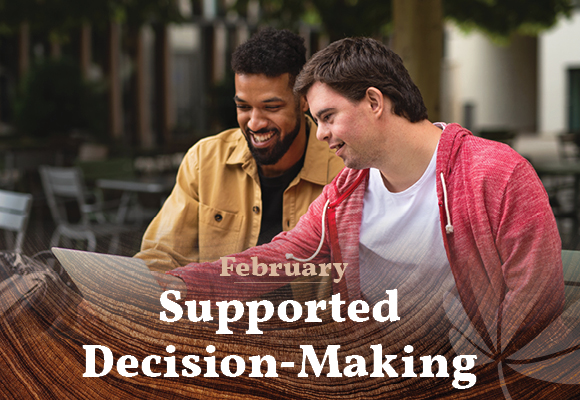
Supported Decision-Making: Help Without Taking Control
Supported Decision-Making (SDM) is a way for people with disabilities to make their own decisions with help from people they trust. The key idea is simple: Needing help does not mean losing the right to choose. SDM supports independence, dignity, and participation in everyday life.
What Is Supported Decision-Making?
Supported Decision-Making means a person keeps the legal right to make decisions but receives help understanding information, considering options, and communicating choices. Supporters may include family members, friends, or professionals. Their role is to support, not decide.
SDM is based on three core principles:
- The person stays in control
- Decision-making authority is not transferred
- Support is tailored to the individual’s needs
How Is SDM Different From Guardianship?
Guardianship gives decision-making power to someone else. Supported Decision-Making keeps that power with the individual. Instead of asking “Who decides?” SDM asks “How can this person decide with help?” Because it preserves rights, SDM is often considered the least restrictive option.
How Powers of Attorney Relate to Supported Decision-Making
A power of attorney (POA) is another option that can help adults manage decisions without going to court. Like Supported Decision-Making, a POA is usually less restrictive than guardianship.
What’s the Difference?
- Supported Decision-Making
- The person makes the decision
- Supporters help explain and communicate
- No authority is given away
- Power of Attorney
- The person gives authority to an agent
- The agent can act on the person’s behalf
- Authority may be limited or broad
SDM is about helping someone decide.
A POA is about letting someone act.
Can SDM and a POA Be Used Together?
Yes. Many individuals use both approaches. Supported Decision-Making may help a person understand options and communicate choices, while an agent acting under a power of attorney may execute documents or implement decisions. Both tools can support independence when used thoughtfully.
Why This Matters
Courts often look for less restrictive options before ordering guardianship. Supported Decision-Making and powers of attorney can meet many needs without taking away rights. The right approach depends on the person, not a one-size-fits-all solution.
Is Supported Decision-Making Recognized by Law?
Yes. Many states recognize Supported Decision-Making in their laws, though the details vary. Even where there is no specific SDM law, people can still use SDM in daily life by supporting understanding, respecting choices, and avoiding unnecessary control.
Supported Decision-Making in Arizona
Arizona law allows adults with disabilities to use Supported Decision-Making through a formal agreement.
Under Arizona law:
- An adult chooses one or more trusted supporters
- The adult keeps full legal decision-making authority
- Supporters may help explain information and options
- Supporters may not make decisions or sign documents for the person
- The agreement must be witnessed or notarized
- The agreement can be changed or ended at any time
Arizona’s law confirms that support is not the same as incapacity.
Where Is SDM Used?
Supported Decision-Making can be used in many areas of life, including:
- Healthcare
- Money and budgeting
- Housing choices
- Education and work
- Daily routines and personal goals
SDM focuses on how decisions are made, not whether others agree with the outcome.
How Trustees Work With Supported Decision-Making
Sometimes a trustee manages money for a person who uses Supported Decision-Making. SDM does not change the trustee’s legal responsibilities, it guides how decisions are discussed and understood.
What This Looks Like
- The person shares their wishes with help from trusted supporters
- The trustee listens to those supported wishes
- The trustee makes decisions based on both the person’s preferences and legal requirements
Supporters help explain choices, but they do not replace the trustee or make decisions for the person.
Why This Matters
Supported Decision-Making helps trustees:
- Understand what matters most to the person
- Avoid making assumptions
- Show that decisions were thoughtful and respectful
When SDM is used well, decisions are clearer, better documented, and more person-centered.
Protection Still Matters
Trustees are still responsible for protecting against harm. If support becomes pressure or control, the trustee may step in or require changes. SDM supports independence, but it also helps identify when extra protection is needed.
Where is SDM Safe?
All decision-making involves some risk. SDM addresses this by encouraging transparency and oversight.
Good SDM practice includes:
- Choosing supporters carefully
- Watching for pressure or control
- Revisiting arrangements as needs change
- Stepping in if support becomes harmful
SDM is not right for every situation, but it should be considered before more restrictive options.
Why Supported Decision-Making Matters
Supported Decision-Making respects the right to make choices, even imperfect ones. It recognizes that independence and protection are not opposites. With the right support, people can participate meaningfully in decisions about their own lives. SDM keeps the person at the center.
